
Anyone who keeps pace with higher education knows there’s a chronic need to improve student access, student success, persistence, and completion. But what does that really mean and why is there an issue to begin with?
Why do some students drop-out, stop-out, or take a long time to graduate. Why do they struggle in repayment? These are complex questions, for sure. Let’s explore these challenges and share suggestions on how to help your former students overcome them.
TABLE OF CONTENTS
What Student Persistence and Completion Really Mean
Defining Student Persistence
Student persistence refers to a student’s ability to continue making progress toward an educational goal over time. This typically includes re-enrollment from one term to the next, continued credit accumulation, or sustained engagement in higher education, even when that path is non-linear.
Persistence recognizes an important reality: today’s students may stop-out, attend part-time, transfer institutions, or change programs before reaching their goal. A persisting student is not defined by a perfect academic trajectory, but by continued forward movement.
Defining Student Completion
Student completion is the successful attainment of a credential such as a certificate, associate degree, or bachelor’s degree. Completion represents the culmination of persistence and is often the metric most visible to policymakers, accreditors, and funders.
Why Persistence and Completion Matter More Than Ever
For institutions, persistence and completion are no longer secondary outcomes. They are core indicators of institutional effectiveness and financial health. Public accountability frameworks, performance-based funding models, and equity initiatives increasingly center on whether students finish what they start.
For students, completion is strongly linked to:
- Improved employment opportunities
- Higher lifetime earnings
- Reduced student loan default risk
- Greater economic mobility
Strong persistence and completion rates directly support a college’s revenue due to tuition and fee income. When students withdraw or stop out, the institution loses not only the remaining tuition revenue from that student but may also face higher recruitment costs to replace them. In contrast, higher persistence and completion reduce churn, improve financial predictability, and help sustain long term program viability.
Understanding persistence and completion together allows institutions to move beyond narrow graduation metrics and focus on sustained student success.

U.S workers ages 25-34 earnings boost
Compared to those with a high school diploma.
18% more
with an associate’s degree
35% more
with a bachelor’s degree
Key Challenges Students Face
Academic Barriers to Persistence
Many students enter higher education underprepared for college-level coursework or unfamiliar with academic expectations. Gaps in foundational skills, unclear program pathways, and inconsistent advising can lead to early frustration and disengagement.
When academic support is reactive rather than embedded, students may not seek help until they are already off track.
Financial Barriers That Disrupt Student Momentum
Financial challenges remain one of the most significant threats to student persistence. Even small, unexpected expenses (e.g., textbooks, transportation, or emergency housing costs) can derail enrollment.
Students may also struggle to understand:
- Financial aid eligibility and renewal requirements.
- Loan obligations and long-term repayment implications.
- The relationship between enrollment intensity and financial outcomes.
Without clear guidance and support, financial stress often forces students to reduce course loads or stop out entirely.
Personal and Life Circumstances
Today’s students are balancing far more than coursework. Work schedules, caregiving responsibilities, physical and mental health concerns, and competing life demands all impact a student’s ability to stay enrolled.
These challenges are not signs of low motivation, they reflect the realities of modern learners navigating education within complex lives.
Life Skills and Institutional Navigation Challenges
Success in higher education requires more than academic ability. Students must also navigate institutional systems, manage time effectively, advocate for themselves, and know when and how to ask for help.
When institutions assume students already possess these skills, support gaps emerge, particularly for first-generation and adult learners.
How the Changing Student Profile Impacts Persistence
The majority of today’s college students are considered nontraditional.
- Older than 24
- Enrolled part-time
- Working while attending school
- Financially independent
- First-generation college students
Traditional institutional models (designed around full-time, residential students) often fail to meet these learners where they are. Improving persistence requires institutions to adapt structures, supports, and expectations accordingly.
Core Strategies That Drive Persistence and Completion
Financial Literacy and Clear Expectation-Setting
Students are more likely to persist when they understand both the cost and value of their education. Proactive financial literacy and expectation-setting help students:
- Anticipate expenses and borrowing needs.
- Understand aid renewal and satisfactory academic progress requirements.
- Make informed decisions about enrollment intensity.
Institutions that integrate financial education early and reinforce it throughout the student lifecycle, reduce financial shock and build student confidence.
Academic Support Systems That Keep Students on Track
Effective academic support is intentional, consistent, and relationship-based. Key components include:
- Proactive academic advising.
- Tutoring and supplemental instruction.
- Clear program maps and milestones.
- Early alert systems that trigger timely outreach.
When support is embedded rather than optional, students are more likely to stay engaged through academic challenges.
Institutional Leaders are Paying Attention
74%of higher-end institutions surveyed listed ENROLLMENT as the top risk.
EABLife Management Skills and Campus Integration
Students persist when they feel connected to their institution, their goals, and the support available to them. Teaching life management skills such as time management, goal-setting, and help-seeking empowers students to navigate obstacles independently.
Campus integration does not require traditional residential experiences. It requires intentional connection points that help students feel seen, supported, and capable of success whether they’re on campus, online, or hybrid learners.
Measuring Student Persistence and Completion Success
Common Higher Education Success Metrics
Institutions typically measure persistence and completion through specific indicators.
- Term-to-term and year-to-year retention rates.
- Credit momentum and completion ratios.
- Graduation and credential attainment rates.
- Time to degree or credential.
Increasingly, institutions are also tracking transfer success, credential stacking, and post-completion outcomes to better reflect student goals.

Students at highest risk of stopping-out
- First generation college student
- Enrolled in community college
- Feeling disconnected to school community
- Worker
- Transfer student
- Low-income
- Person of color
Using Data to Support Continuous Improvement
Data plays a critical role in sustaining progress. When institutions use integrated data systems and analytics, they can:
- Identify at-risk students earlier.
- Evaluate which interventions improve outcomes.
- Allocate resources more strategically.
The most effective institutions move from reactive support models to proactive, data-informed engagement, ensuring students receive the right support at the right time.
Sustaining Long-Term Gains in Persistence and Completion
Improving persistence and completion is not a one-time initiative. It requires ongoing commitment, cross-functional collaboration, and continuous evaluation. Institutions that sustain progress align academic, financial, and student support strategies around a shared goal: helping students successfully complete what they start.
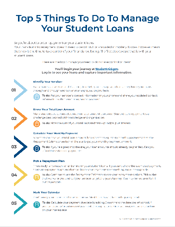
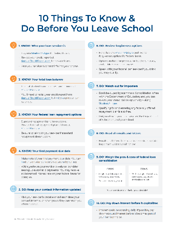
Looking for ways to help your former students manage their student loans?
Here are a few helpful resources to download and share.